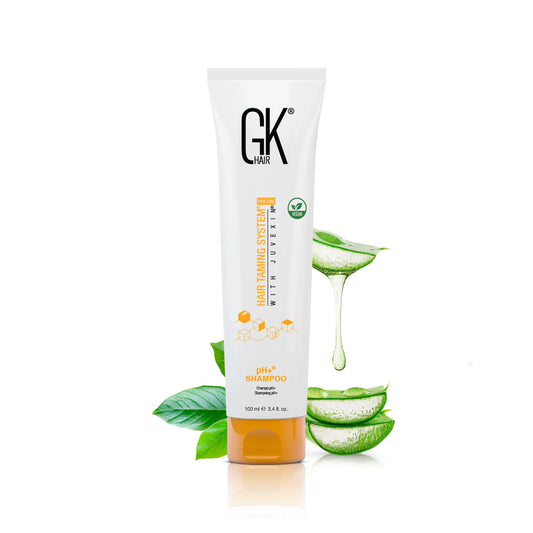

Puerto Rico bleaches hair quickly with its sun and saltwater. Cuticles left open by bleaching lose moisture within hours, and humidity exacerbates brassiness. Knowing how to take care of bleached hair is about embracing Puerto Rico's climate. This quick weekly routine keeps your blonde hair soft, bright, and strong year-round.
Quick answer on how to take care of bleached hair: care for bleached hair by washing it 2-3 times per week with a color-safe shampoo, conditioning every wash, using a hair mask weekly, and sealing the ends with a lightweight oil. Avoid heat styling daily, rinse out chlorine and salt water immediately, and space out toning applications to prevent blonde hair from turning brassy or dry.
What Bleach Does to Your Hair
Bleach lifts the cuticle so it can penetrate and destroy pigment within the strand of hair. This leaves the cuticle raised, and the keratin protein bonds inside damaged. That explains why bleached hair tangles easily and feels coarse to the touch, which aligns with the American Academy of Dermatology's hair care advice for damaged, difficult-to-control hair.
GK Hair developed its line of blonde hair care products with this damage in mind. GK Hair's proprietary Juvexin complex of keratin protein is used in salons worldwide, in over 75 countries.
How Long Does Bleached Hair Last?
Bleached color won't wash out like a gloss would because bleaching lightens your hair instead of coating it with color. However, the color changes as your roots grow out and the toner fades. Most people require root touch-ups every 6-8 weeks, and toner changes every 4-6 weeks.
How to Take Care of Bleached Hair: Your Weekly Routine
Infrequent deep treatments are no match for a simple, consistent routine. Advice from Healthline on repairing damaged hair supports two principles: wash your hair less frequently, and follow a routine free of harsh detergents that adds moisture without stripping your hair of oils. If you live in Puerto Rico, your routine should also include the occasional clarifying wash to remove buildup from minerals and hair products.
| Step | How Often | GK Hair Product |
|---|---|---|
| Wash | 2-3 times a week | Moisturizing Shampoo |
| Condition | Every wash | Moisturizing Conditioner |
| Mask | Once a week | Ultra Blonde Bombshell Masque |
| Oil the ends | Daily or after washing | Argan Oil Serum |
Best Shampoo and Conditioner for Damaged Bleached Hair
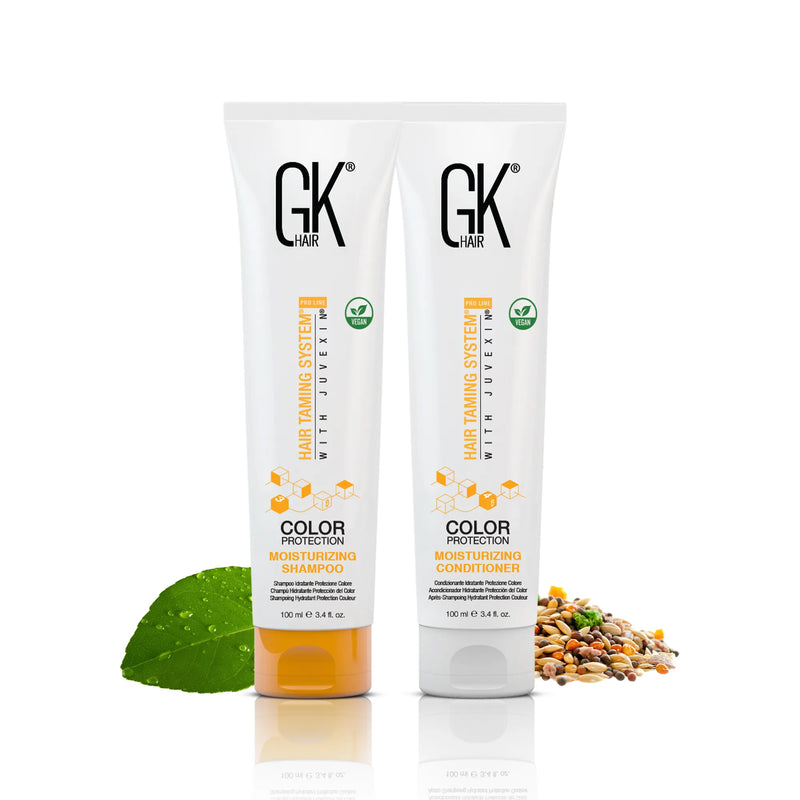
Choose a sulfate-free, hydrating formula, as sulfates will further remove oils that were stripped by bleach. GK Hair's Moisturizing Shampoo and Conditioner will cleanse without drying out your hair even more. It's perfect for post-color hair that feels like straw. Apply shampoo to your scalp and conditioner to your ends each time you wash.
Hair Mask for Damaged Bleached Hair
A once-a-week mask gives more hydration and protein in one application than your conditioner can do in thirty seconds. Dry, damaged hair needs that extra boost. GK Hair's Ultra Blonde Bombshell Masque was formulated for this type of damage. You'll notice softer lengths after just a few applications. Use weekly from mid-length to ends.
Hair Oil for Bleached Hair
Argan Oil Serum should be used as a final treatment instead of using it heavily as a pre-wash. Smooth just a few drops over damp or dry ends to seal the cuticle, eliminate static, and add shine without weighing down fine, bleached hair. It's perfect for softness without excess greasiness.

How to Make Bleached Hair Soft and Silky
Soft hair results from reducing friction and increasing moisture. Every stroke with a rough towel peels the cuticle more:
- Pat dry with a microfiber towel or soft t-shirt rather than rubbing.
- Comb through with a wide-tooth comb from the ends up before brushing wet hair.
- Use a silk or satin pillowcase to eliminate friction while you sleep.
- Rinse your final shampoo with cool water so that the cuticle can lie flat.
- Curly and wavy textures take the same advice, with a little more product left behind.
Leave-In Conditioner and Detangling on Wet Hair
Bleached hair that's wet is also stretched out and more vulnerable to snapping. Technique is just as important as what you put in your hair. GK Hair Leave-In Conditioner Cream provides slip to each strand so a wide-tooth comb can work through knots without breaking. Apply to damp lengths after washing and avoid brushes until dry.
How to Fix Damaged Bleached Hair
Split ends from bleaching can't be reversed (hair is dead once it leaves your scalp), but they can be controlled and look less terrible. The best you can do is prevent additional damage and wait for new growth. GK Hair stylists advise trimming every 6-8 weeks, along with weekly bond-specific masking.
Can You Do a Keratin Treatment on Bleached Hair?
Yes, but you should make sure your hair can tolerate another chemical service by a stylist first. Layering chemical services on damaged hair can cause breakage. GK Hair's Nanoplastia treatment is formulated without harsh chemicals, making it a gentler alternative to traditional straightening treatments. Allow at least 2 weeks if you have bleached your hair first.
How to Maintain Blonde Hair Tone
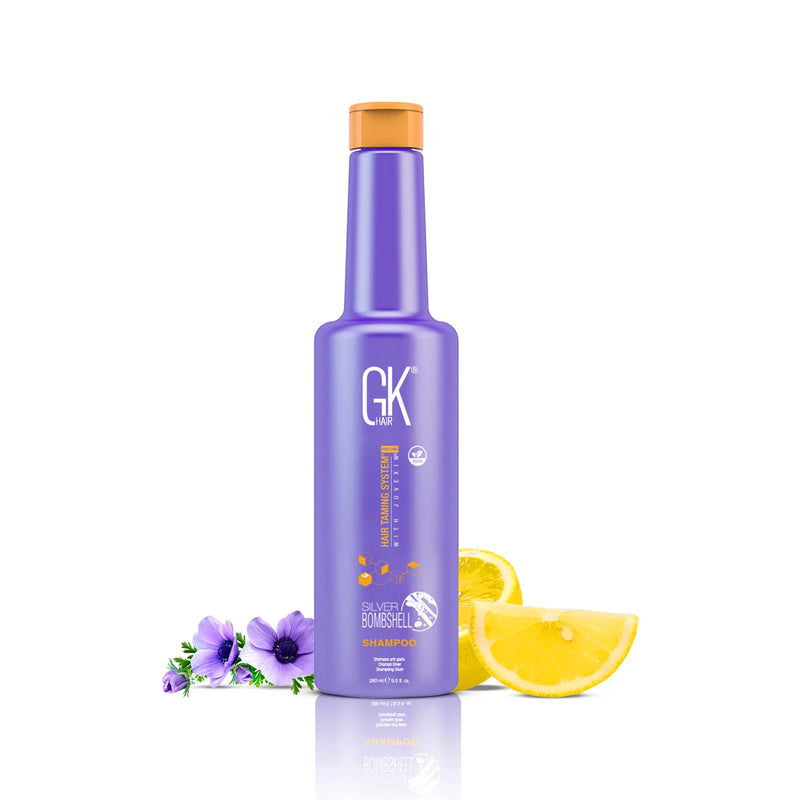
Maintenance is key here. You want to control warmth, not strip it away. Some yellow regrowth between toning appointments is natural. Silver Bombshell Shampoo by GK Hair cancels warmth with violet pigment. It's perfect for those who like to maintain a cool ash or platinum shade. Check out GK Hair's ash blonde guide for more on toning.
How to Get Yellow Out of Bleached Hair
Purple or blue-based toning shampoo will neutralize warmth quickest, as violet pigment is across from yellow on the color wheel. Let Silver Bombshell Shampoo sit on hair for three to five minutes for moderate toning. Leave on longer for more dramatic results. Rinse hair with lukewarm water to seal in tone.
How Often Should You Use Purple Shampoo on Bleached Hair?
Once or twice weekly is sufficient for most blondes. Daily violet shampoo actually tends to have the opposite of the desired effect. Overuse causes a build-up of violet pigment, which can make pale blonde hair look dull or give it a light lavender cast. Reserve daily washings for your normal shampoo and grab the purple only when needed.
Protecting Bleached Hair from Heat, Sun and Chlorine
Hot sun, warm pools, and saltwater can be brutal on any hair color, but bleached hair fades fastest because it is the most porous. Heat, UV light, and chlorine all draw moisture out quicker than a treatment can replace it.
Heat Protectant for Bleached Hair
Heat protectant is more important here than almost anywhere else. The flat iron or blow dryer can burn fragile strands in seconds. GK Hair's ThermalStyleHer Cream creates a protective barrier before your heat tool even touches your hair. It's best for anyone who styles their hair frequently and doesn't want additional damage. Apply to towel-dried hair and use your tools on a low or medium setting.

How to Protect Colored Hair from Sun
A wide-brimmed hat or a leave-in spray with UV filters will help protect against the most damage, as UV light breaks down hair protein and alters color over time. A review article on hair damaged by UV in Collegium Antropologicum associates UVB damage with protein loss and UVA with color change, which causes blonde hair to go brassy after a day in the sun.
How to Protect Bleached Hair from Chlorine
Wetting your hair with fresh water before the pool works best, because hair that's already saturated will absorb less chlorinated water. After swimming, a clarifying wash will help rid your hair of the mineral build-up that chlorine and hard water cause. That's why clarifying shampoo is a necessity in Puerto Rico's humid, hard-water climate. Follow with your regular conditioner.
Stylist's Corner: GK Hair colorists stationed in humid environments carry at their stations a small spray bottle filled with a leave-in conditioner and water mixture. This isn't only for detangling purposes. Spritzing on this light mist prior to sun or chlorinated water exposure provides the cuticle with something to grip onto other than its own inadequate moisture.
Blonde That Holds Up to the Island Life
Knowing how to take care of bleached hair boils down to routine: wash gently, condition every wash, and protect hair from sun, heat, and chlorine damage before it happens. The weather in Puerto Rico can be harsher on blonde hair, but maintaining the right regimen will keep it shining. Shop GK Hair's Color & Masque collection to create your routine.
FAQs
Does bleached hair grow back healthy?
Yes, because your new growth will come from your scalp, and bleach only affects hair that has already grown out. A coloring service does not alter the hair follicle, so growth will always grow back at its natural texture and integrity. All you have to worry about is cutting the damaged length away.
Does bleached hair fade when you wash it?
Yes, bleached hair will look slightly different after each wash because toner and topical color sit on the surface of the strand and fade away with each wash. The lightened base underneath will not revert by itself. Using a color-safe, sulfate-free shampoo and washing less will slow this process considerably.
Does chlorine turn blonde hair green?
Yes, but chlorine by itself will not normally do this. Copper and other metals in pool water react with porous bleached strands, causing them to oxidize to a greenish color. Bleached hair also attracts more metals than non-treated hair. Washing your hair before swimming and clarifying after will eliminate most of the build-up.