
Quick Answer: To protect hair from the sun, layer three defenses: cover it with a hat, scarf or protective style; use a shampoo, conditioner or leave-in with UV filters on the strands; and apply SPF 30 or higher sunscreen to the exposed scalp at your part, crown and hairline. Rinse hair before and after swimming, and reapply protection after every swim.
What the Sun Actually Does to Your Hair
In Puerto Rico, where UV stays high all year, this is a daily routine, not a summer checklist. There are real benefits of sunlight to hair, but on the hair shaft itself, that same UV radiation is breaking down the proteins you already have.
UV radiation penetrates the hair shaft and breaks the disulfide bonds that hold keratin together, a mechanism described in research on photo-damaged hair. When those bonds break, the cuticle layers lift, causing moisture to escape the cortex. While that's happening, UV rays oxidize the melanin molecules that give your hair its natural color. The oxidation process causes color to fade, and it's more prominent in blonde, lighter and warm shades.
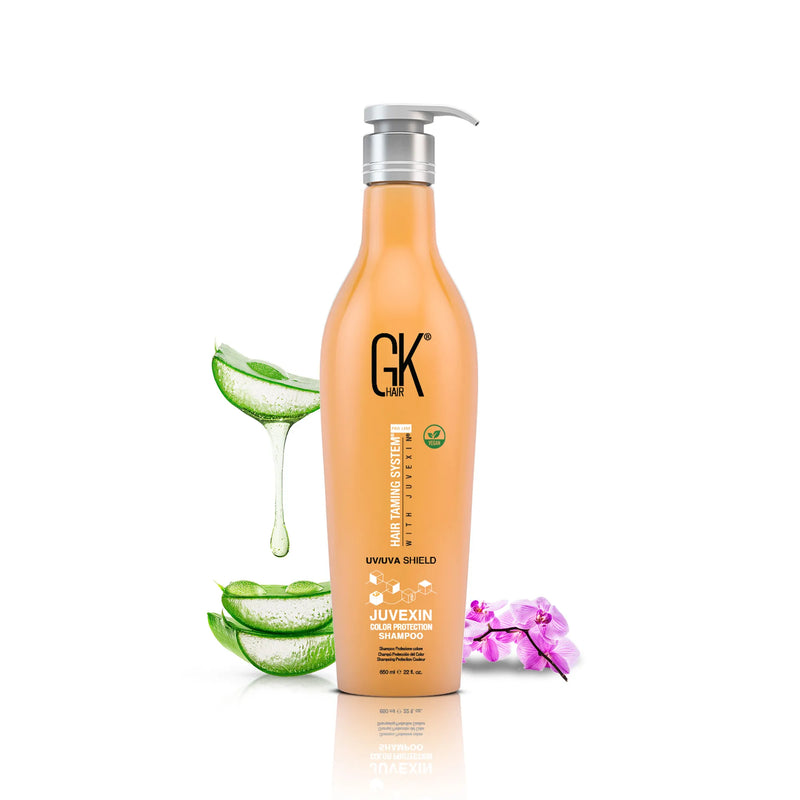
This is where Juvexin V2 comes in. It's our plant-based protein, derived from quinoa and pea, and it's built to repair and strengthen hair from the inside out, reinforcing strands that UV has weakened. Its larger molecules also wrap around the cuticle, forming a shield against free radicals such as UV rays and pollution. That's why our Shield Shampoo and Conditioner is built around it, so the line is built to hold up against sun exposure wherever you're headed.
How UV breaks down keratin in the hair shaft
Keratin makes up most of your hair's structure. Exposure of hair to intense sunlight causes photochemical degradation of amino acids (specifically cystine and tryptophan) within these keratin proteins. As UV radiation cleaves these molecular chains, the hair shaft loses its tensile strength, becoming porous, weak and highly susceptible to snapping under routine brushing or styling.
Why sun-damaged hair looks dry, frizzy and faded
When photo-oxidation lifts the outer cuticle scales, the hair shaft loses its smooth surface. Light no longer reflects evenly off the cuticle, making hair look dull and straw-like. Lifted cuticles also let internal moisture evaporate while atmospheric humidity rushes in, creating chronic frizz, rough texture and visible color fading.
Does hair protect you from the sun?
No, not as well as you'd think. No matter how long or thick your hair is, your scalp is exposed at your part line, crown and hairline. Those are the three spots that burn first, because hair doesn't filter UV like clothing does.
Excessive sun exposure, including a bad scalp sunburn, is a recognized trigger for telogen effluvium, a temporary shedding that shows up two to four months after the event. That's why protecting your scalp from sun damage isn't optional.
How to Protect Hair From the Sun Every Day
Prevention is your first line of defense. Think of this as your baseline: the habits that work year-round, not just on beach trips.
1. Cover up with hats, scarves and protective styles
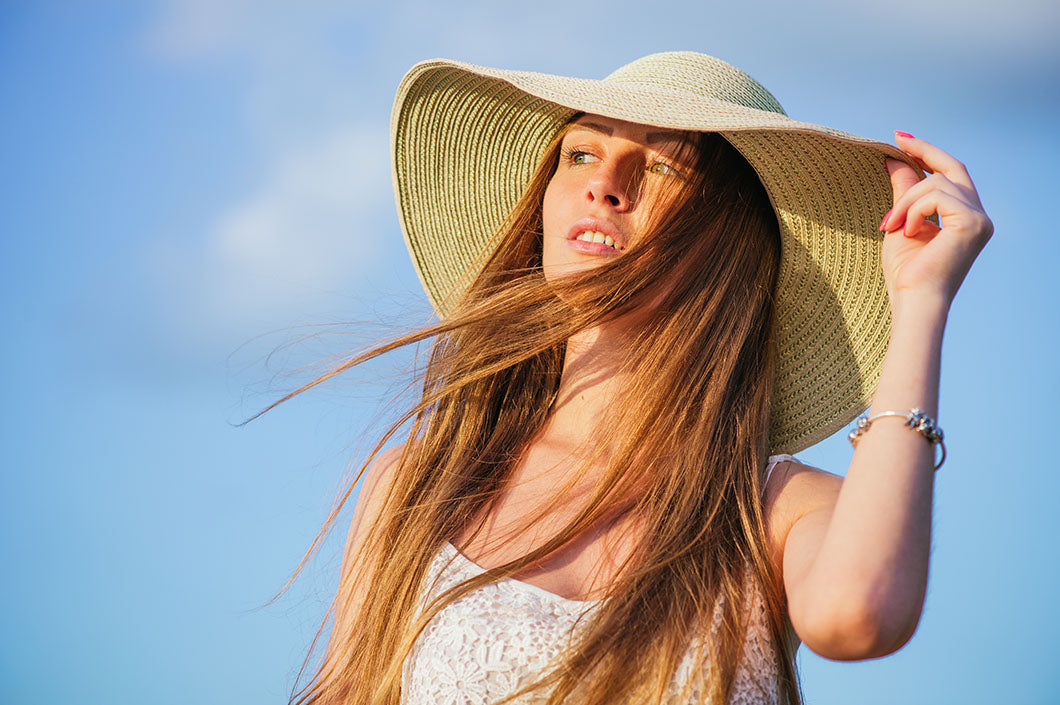
Hats, scarves and protective styles do double duty as sun protection for hair and scalp. The more you cover, the more you reduce your risk of sun damage. Wide-brim hats, ball caps or scarves designed to cover your hair give you the best protection. Protective styles like braids and buns also reduce surface exposure, especially if you're keeping hair off your neck and shoulders.
2. Time your exposure around peak UV hours
When you can help it, avoid the sun between 10 a.m. and 4 p.m. UV intensity peaks in that window, which means a higher chance of damage if you're in direct sun. Plan to be out before or after those hours when possible.
3. Rinse and rehydrate after swimming
Chlorine and saltwater strip moisture and lift the cuticle layer, which makes your hair more vulnerable to UV at the same time. Rinse with clean water before swimming so it absorbs less chlorine and salt (hair can only hold so much water; once it's saturated it can't take on more). Immediately after swimming, rinse with fresh water, then wash with a moisturizing shampoo and conditioner as normal.
UV Hair Protection Products: What Actually Works
Each hair sun protection format has a different job, so here is what each one does and when to use it.
What SPF for hair really means
Hair products with UV protection aren't rated with an SPF number the way skin sunscreen is. Instead, SPF for hair comes down to the UV filters in the formula. Check the ingredient list for filters such as benzophenone-4 or cinnamates like ethylhexyl methoxycinnamate, which absorb UV before it reaches the hair shaft. Our Shield Shampoo and Conditioner carry UV/UVA protection, so your wash routine does the baseline work every time you shampoo. Think of it as a protective coating, not a number.
| Format | What it does | Best for |
|---|---|---|
| Shampoo and conditioner with UV filters | Baseline protection every wash | Daily routine foundation |
| UV spray or leave-in | Extra layer reapplied through the day | Reapply after swimming or every two hours in direct sun |
| Hat or scarf | Blocks UV outright | Physical cover (most effective) |
UV hair protection sprays and leave-ins
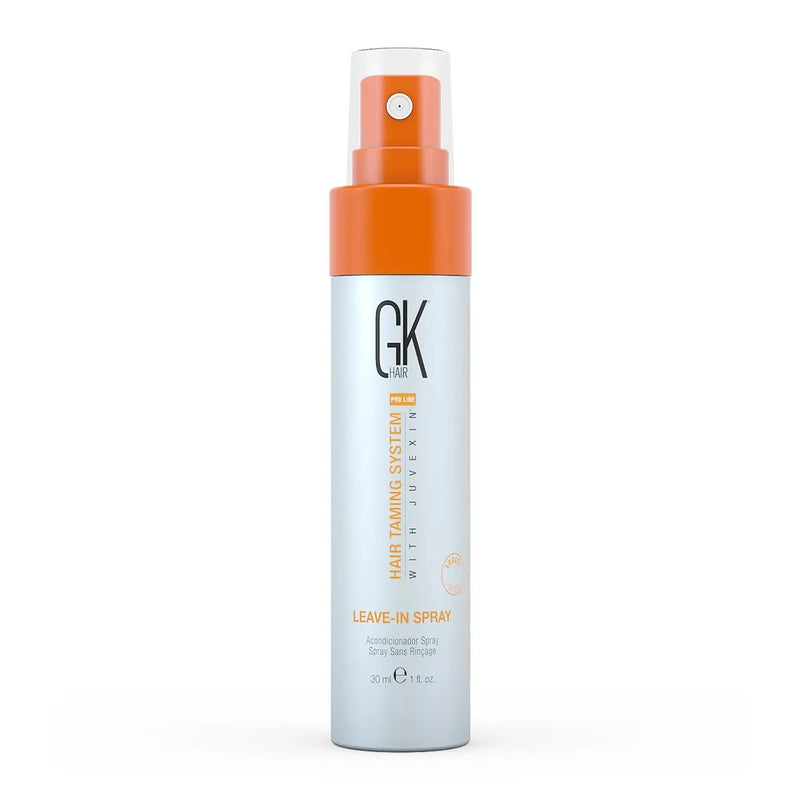
Is there a UV protection spray for hair? Yes. A UV hair protection spray adds a leave-on layer of UV filters during the day; mist it over damp hair in the morning. The spray format works better than a lotion because it doesn't coat your strands or make them sticky. Our Leave-In Spray isn't a UV filter, but it earns its place before a swim: GK Hair recommends it to help shield strands from chlorinated water, salt water, sweat and environmental impurities, and it adds a layer of moisture. Reapply your UV protection once you're out of the water.
How often to reapply and what changes after swimming
Reapply UV hair protection spray after swimming and after towel-drying, and every two hours if you're in direct sun all day. The swim is the biggest moment: chlorine and salt wash away the coating, so you're starting from scratch. This one's non-negotiable in Puerto Rico, where many people swim several times a week.
Stylist's Corner: A protectant misted over the top of the head mostly lands on the surface layer, and the part line gets almost none. Stylists apply it the way they apply color: a center part, then a parallel part an inch to each side, spraying straight down each channel before smoothing the rest. On long hair, finish with a loose braid so the ends, the oldest and driest part of the strand, stay out of direct sun.
Protecting Your Scalp From the Sun
Your scalp burns before anywhere else on your head. It needs its own protection strategy.
How to put sunscreen on scalp and part line
Part your hair in sections down the middle and sides. Apply an SPF 30 or higher sunscreen along each part line, as Cleveland Clinic dermatologists advise, using a stick or spray that won't coat your strands. The crown and hairline burn first, so spend extra time there.
Sun Protection for Every Hair Type
Some hair textures are more susceptible to sun damage than others, so match your products and techniques to your hair type.
Curly and coily hair
Curly and coily hair tends to run more porous, because every twist disrupts the cuticle layers, and the tighter the curl, the more places the cuticle can lift. That lets UV-induced moisture loss happen faster. Curly hair sun protection should include protective styles that keep hair off your shoulders. Use a deep conditioner treatment and leave-in sprays formulated for curls, and consider a protein treatment before heavy sun exposure to reinforce the cortex. If you're not sure where your hair sits, our guide to low versus high porosity hair walks you through the test.
Color-treated and blonde hair
Coloring lifts the cuticle layer to make room for color, and that lift stays even after the color is set. Lifted cuticles let UV in faster, and color fades more obviously. How to protect colored hair from sun starts with switching to a UV and UVA color protection shampoo and conditioner like our Shield line. Unlike regular shampoo, it's formulated to protect color while rebuilding the cortex.
Sun fades all hair color, but blonde, light and warm shades are the most vulnerable. If you have blonde or color-treated hair, make UV protection part of your color-care routine: wash with our color and blonde care range and reapply UV protective mists when you're outdoors.
Fine and thinning hair
Fine hair has less mass to shield your scalp, so scalp protection matters more than caring for individual strands. Thinning hair sun protection focuses on your part line and crown. Use a spray sunscreen or sunscreen stick on exposed scalp instead of a lotion that will weigh fine hair down, and add a hat for long stretches outdoors.
Protecting Your Hair in Puerto Rico's Climate
Puerto Rico's climate creates stressors unique to tropical locations. Sitting at about 18 degrees north, inside the tropics, Puerto Rico gets intense UV all year, with an index that regularly climbs to 10 or higher. A UV routine designed for a mainland US summer lasts three months. Here, hair protection is a permanent daily routine.
Tropical heat also means high humidity and plenty of beach time. When humidity is high, the hair shaft swells and the cuticle stays slightly open, letting UV radiation and salt penetrate deeper into the cortex. The everyday habits above, plus a fresh-water rinse before and after every swim, are what keep island hair healthy.

How to Protect Hair From Sun Damage Naturally
If you prefer a natural approach alongside your product routine, start with the basics. Shade, a UPF-rated hat and a silk scarf are the most effective natural protection. Light oils such as almond, coconut or avocado add a thin barrier on the strands, but they do not replace UV filters.
How to Fix Sun Damaged Hair
If you're noticing the aftermath, dryness, frizz, fading and hair breakage, the repair routine is a week-by-week process. Damage doesn't reverse overnight, and severe damage gets trimmed, not fixed.
The repair routine, week by week
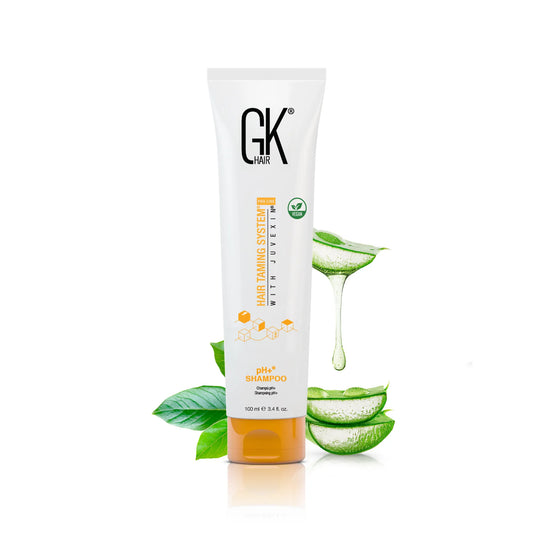
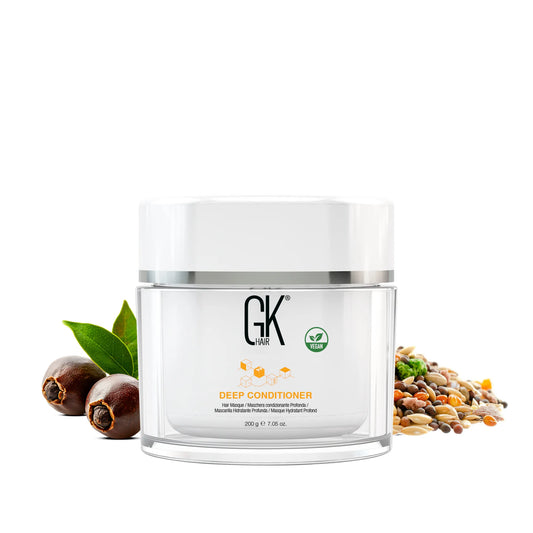
- Week 1 (Reset and rebuild): Wash with our pH+ Shampoo, a deep-cleansing clarifying wash, to lift salt, chlorine and product buildup, then apply Deep Conditioner through the lengths and leave it on for 20 minutes before rinsing.
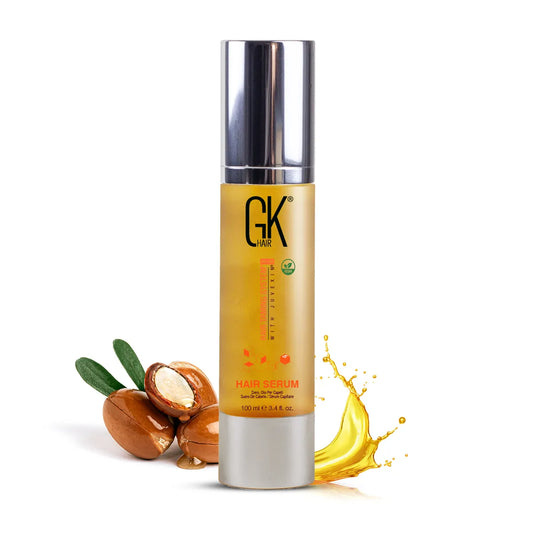
- Weeks 2 to 3 (Hydrate and seal): Wash with Shield Shampoo and Conditioner, then smooth a few drops of Argan Oil Serum through damp ends. Repeat the Deep Conditioner at the end of week three.
- Week 4 (Trim): Visit your salon for a trim. Cutting off split ends stops damage traveling up the hair shaft.

Best shampoo and hair mask for sun damaged hair
The best shampoo for sun damaged hair includes UV filters, so you're not re-damaging while you repair. Our Shield line cleanses without stripping, which makes it ideal for sun damaged hair care. Our Deep Conditioner is the hair mask for sun damaged hair: Juvexin V2 and jojoba seed oil rehydrate weakened strands. Leave it on clean, damp hair for 20 minutes, once or twice a month, and follow with Argan Oil Serum to lock in moisture.
Before and after sun damaged hair
Sun damaged hair is dull in color, rough to the touch and quick to frizz or snap. After a four-week repair routine, expect strands that are smoother, shinier and less prone to breakage. The fading on color-treated hair won't reverse, which is why prevention is key.
Embrace the Sunshine
Preventing sun damage is far easier than repairing broken keratin bonds after photo-oxidation. Once you know how to protect hair from the sun, whether through smart outdoor habits or switching to a shampoo and conditioner with UV filters, you can guard your strands against structural damage, color fading and dryness in any climate. Explore the full range of protective hair care at GK Hair collections to build your sun defense routine today.
Frequently Asked Questions
What is the best UV protectant for hair?
The best UV protectant is the one you'll use every day: a shampoo and conditioner with UV filters for baseline protection, plus a hat for long stretches outdoors. Our Shield Shampoo and Conditioner protect against UV/UVA rays and color fading, and they're made for dry, color-treated and sun-exposed hair in every texture, from straight to coily.
Can you put sunscreen in your hair?
Technically yes, but you shouldn't. Is sunscreen bad for your hair? Body sunscreen isn't harmful, but it's made for skin: it dries tacky, builds up on the strands and is hard to rinse out. Use a spray or stick sunscreen made for the scalp along your part and hairline, and rely on hair products with UV filters for the lengths.
How do you get sunscreen out of your hair?
If body sunscreen ends up in your hair, wash with a clarifying shampoo to strip it, then rinse thoroughly with cool water. That's why a spray or stick sunscreen made for the scalp is the easier choice: it washes out like any other product.
Can sun damage to hair be reversed?
Partly. Dryness, frizz and weakness improve with protein and moisture treatments. Split ends and severe breakage get trimmed, because hair can't repair itself the way skin does: each strand is dead once it leaves the follicle. Prevention is always easier than repair.
Do you still need UV hair protection on cloudy days?
Yes. UV rays penetrate clouds, so an overcast day, or one that doesn't feel hot, still damages hair. In Puerto Rico this is especially true, because the UV index stays high to extreme all year.